
Why Don’t People Steal Books? Confessions of a Crime Fiction Thief
Books left on the floor, doorstoppers at Harvard, and a book club that needs to get back together.
🇮🇹 Leggi l’articolo in italiano.
I would have stolen those books.
I mean the ones that ended up on the floor of the Feltrinelli bookshop in Turin during the unrest on 17 October. It’s been over a month, and one detail keeps coming back to me. According to Feltrinelli, nobody took a single book.

That puzzled me. It may have something to do with my own record when it comes to book theft. Two offences, to be precise. Both involving Agatha Christie.
The first heist was nearly fifteen years ago, at a seaside bed and breakfast near Ancona. I was breaking up the drive from Calabria to Milan. On the bookshelf in the guest area, I’d stumbled across a 1981 Oscar Mondadori edition of The Thirteen Problems, featuring Miss Marple.
I’d started reading it, but one night isn’t enough to solve thirteen problems. How could I abandon Miss Marple in the middle of an investigation?
The book ended up in the car with the luggage. It was only after I’d driven off that I remembered it wasn’t, technically speaking, mine.
An accident, of course.
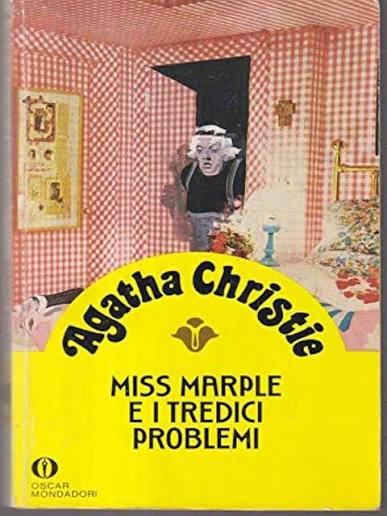
The second incident took place a few years later. Another drive from Calabria to Milan, another overnight stop, this time at an old hotel in Rome. And there was Agatha Christie again. This time it was a 1978 Giallo Mondadori edition of Sparkling Cyanide, published in Italy as Giorno dei morti.
I’d read it as a girl. My mother’s godmother’s daughter had lent it to me. The moment I saw it again, I couldn’t resist the urge to reread it. And so that book followed me to the car too.
Two hotels, two books by the same author.
The first time, I might simply have forgotten to put the book back. The second time was beginning to look like a modus operandi.
That was the end of my life of crime. Or perhaps opportunity and the object of my desire simply never crossed paths again…
Desire is a complicated social business
In Turin, the books stayed on the floor. In Milan, during unrest around the same time, people made off with shoes from Foot Locker.
I’m hardly suggesting they ought to have stolen the books from Feltrinelli as well. But after years spent studying consumption, inequality and social movements, first during my PhD and then as a researcher, I couldn’t help wondering about the contrast. The protests in Milan and Turin brought me back to three questions. What happens when certain ways of life are on display for everyone to see, yet within reach of only a few? Why does owning a particular thing earn you status in one circle and barely register in another? And how can people in the same society challenge inequality while still wanting the very things that make it visible?
These days I teach Italian and try to pass on my love of reading to my pupils. Between the sociologist, the teacher and the reader with a criminal record, I’d say there’s enough here to open an investigation.
One of the exams I took to win my PhD scholarship was on social movements. I wrote about relative deprivation, the idea that how well off we feel depends on what others have and what we think we ought to have ourselves. Discontent can grow in the gap between what people expect and what they can realistically attain. It’s one way to think about the tensions that helped fuel the French Revolution, which would be a lot to ask of any single idea.
I’m hardly about to compare the storming of the Bastille to the raid on Foot Locker. Robespierre might have a thing or two to say about that.
Still, comparing ourselves with others helps shape what we want. Veblen explained this through conspicuous consumption. In his day, a silver tea service gave you a way to serve your guests and show them how much you could afford to spend. Today, a pair of limited-edition trainers will do, provided everyone knows what they cost. Veblen didn’t have Instagram, but unboxing videos would have kept him busy for years. Anyone can watch. Buying is another matter.
We’ve got much better at making the same things desirable to everyone than at making them attainable.

Bourdieu walks into a bookshop
So far, we’ve been talking about the status certain things can bring. But how do we learn to recognise it in the first place? What makes one particular pair of trainers so desirable? And why might a book leave someone else entirely cold? My own record suggests there’s more than a theoretical question here.
This is where I have to bring in Bourdieu. So much for a light read.
Our tastes have a history. Family, education and experience all play a part in what we come to want. That goes for books, too. If you grow up around people who read, books are familiar from the start. Others may develop that familiarity at school or in a library.
A book is an odd sort of possession. You can buy it, collect it or even steal it. Making what’s inside it your own takes time and attention.
The moment you put on something with a recognisable logo, it can tell people which crowd you belong to. A novel asks you to stop and open it.
Books can be status symbols too, of course. Think of first editions, or of wanting another copy of a book you already own simply because it has a different cover.
But back to the trainers and the question we started with. If owning something promises to change how others see you, what happens when you can’t afford it?
Enter Merton. I promise he’s the last sociologist I’ll drag into this. At least for today.
Merton points out that a society can encourage people to aspire to success while giving them very different chances of achieving it. One possible response is to keep pursuing the same goals through means society considers illegitimate. Someone who steals an object that stands for success may have bought into the values of consumer society entirely. They want the status symbol too. They just skip the checkout.
That’s one way to think about it. What actually motivated the people responsible for the damage and theft is still an open question. People who protested peacefully deserve to be treated accordingly. A damaged bookshop tells us very little about an entire generation’s relationship with culture.
What I’m really curious about is how we learn to want to read a book. And how much room we’re prepared to make for it.
Meanwhile, at Harvard, they’re reading doorstoppers
While this article was sitting patiently in my drafts, I came across a news story that made me pull it out again.
Harvard’s Humanities 10 is drawing a lot of interest. Students tackle demanding works, from The Odyssey and The Iliadto Joyce’s Ulysses. There’s a book a week, writing and discussion, and no digital devices in class.
Doorstoppers, in other words. The ones we put on the shelf and promise ourselves we’ll get to when we have a bit of time. Maybe when we retire.
The course has been running since 2008. Its popularity has become a talking point now that we can ask AI to summarise a book in seconds. Yet here are students signing up for the chance to take their time with a book, give it their full attention and talk it through with other people.

That’s the part that interests me. A summary can tell me what happens in a novel. Reading it is where I stop over a sentence, get annoyed with a character, change my mind and, once we start talking, discover that someone else picked up on something I’d missed completely.
There’s no need to choose books by weight or award points for suffering. Nobody should have to tackle Joyce just to say they did it. The last thing we need is to turn reading into another status competition. After bringing in Veblen, that would be embarrassing.
Our own little literary mystery
The news from Harvard had one very practical consequence. I nudged the teachers’ book club I run to finally settle on a date.
The club was alive and well. The mystery was whether any evening had survived the start of the school year.
For our summer read, we’d picked Qualcosa di meraviglioso by Gianluca Gotto. We already had our doorstopper, and many of us had read it. The toughest thing we had left to get through was our diaries.
I pointed out that we couldn’t let Harvard show us up.
They were working their way through the voyage of Odysseus. We were still trying to find a date.
The school workload is real. We know that all too well. But if we wait for it to let up, we’ll be discussing our summer read next summer.
And if I ask my pupils to make time to read, I have to protect that time in my own life too. I owe it to something I love and hope they’ll come to love as well. Reading deserves a place in the diary alongside everything else that matters to us.
The case remains open
I don’t know why nobody took the books from Feltrinelli. As for whether reading makes you a better person, my two offences should settle the question of whether a love of books is proof of good character.
What I do know is that the desire to read needs nurturing. With children, that can mean giving them a story that makes them want to read another. For us grown-ups, it can mean making time to talk about what we’ve read.
The two Agatha Christie novels I “liberated” are still on my bookshelf. I’m willing to return them and offer a heartfelt apology, assuming my former hosts are still prepared to accept it.
In the meantime, I’m trying to steal something else. An evening back from my commitments, a few pages’ worth of attention back from my distractions.
This time, I’m counting on my fellow teachers to be my accomplices.
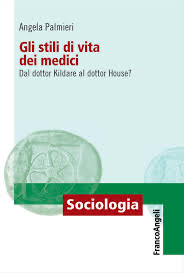
Author’s note. If you’re curious about my work as a sociologist, my book Gli stili di vita dei medici. Dal dottor Kildare al dottor House? (Doctors’ Lifestyles: From Dr Kildare to Dr House?) was published by FrancoAngeli in 2012. It grew out of two empirical studies on the relationship between professional identity, consumption and social recognition. Veblen and Bourdieu make an appearance there too, this time with no involvement in my thefts of crime fiction.
News sources
- ANSA, 18 October 2026. The reopening of the Feltrinelli bookshop at Turin’s Porta Nuova station.
- Il Foglio, 21 October 2026. Feltrinelli’s head of communications on the books that were left behind.
- Il Giornale, 20 October 2026. Looting at shops in Milan.
- Giornale della Libreria, 5 November 2026. Harvard’s Humanities 10 course.
Further reading
- Thorstein Veblen, The Theory of the Leisure Class (originally published in 1899). Italian edition translated by Franco Ferrarotti, Einaudi, 2007. Veblen’s account of conspicuous consumption explains how what we buy and display can signal social status. Italian edition.
- Pierre Bourdieu, Distinction: A Social Critique of the Judgement of Taste (originally published in French in 1979). Italian edition, il Mulino, 2001. Bourdieu explores how taste is shaped by our upbringing, experiences and place in society. Italian edition.
- Robert K. Merton, “Social Structure and Anomie”, American Sociological Review, vol. 3, no. 5, 1938, pp. 672–682. Merton examines the tension between the goals a society encourages people to pursue and their unequal access to legitimate ways of achieving them. Journal article.
- Angela Palmieri, Gli stili di vita dei medici. Dal dottor Kildare al dottor House?, FrancoAngeli, 2012. Publisher’s page.